The History of the Episcopal Church in Alaska
The work of the Episcopal Church in Alaska began in Anvik in 1887. Two men, the Rev. Octavius Parker from Oregon and the Rev. John Chapman from New York City founded Christ Church mission on the lower Yukon River. Previous to this, Canadian Anglican missionaries had come to the upper Yukon and had even come as far downriver as Tanana. This established a precedent for Episcopal work on the Yukon and Tanana drainage.
In 1890, an Episcopal missionary doctor, John Driggs, was sent to Point Hope on the Arctic Coast to start a school and to minister to the medical needs of the Inupiaq people. Dr. Driggs lived with the people of Point Hope for 18 years. His work made for a strong Episcopal church on the western Arctic Coast.
In 1895, the Rev. Trimble Rowe was elected the first bishop of Alaska. He came into the country across the Chilkoot Trail. His ministry focused on the medical needs of gold miners in the gold rush towns and on the Native people, who were falling prey to many diseases brought by the white man. Bishop Rowe founded hospitals in Skagway, Wrangell, and Ketchikan as well as Fairbanks, Ft. Yukon, Rampart and Iditarod. The church also established boarding schools for orphaned Native children at Nenana, Tanana, Ft. Yukon, Anvik and Tanacross. Bishop Rowe serviced until 1942. Archdeacon Hudson Stuck, remembered for his ministry and his ascent of Mt. Denali, arrived in Alaska in 1904. He died on October 10, 1920 and is buried in Ft. Yukon.
Bishop Bentley succeeded Bishop Rowe and serviced until 1947. Bishop Bentley had come to Alaska as a layman and was ordained deacon, priest and bishop while service here. He is well known for his summer travels by boat when he would visit the missions up and down the Yukon and Tanana Rivers.
In 1948, the Rev. William J. Gordon, the priest at Point Hope, was chosen as the third bishop of Alaska. He served for 25 years. During his time he championed the cause of Native people and worked hard to put a priest in every village. Traveling by boat was too slow, so Bishop Gordon learned to fly and with the church plane he was able to bring people together in a way that had never been possible before.
In 1968 a significant conference took place in Ft. Yukon. It was the beginning of teaching people to run their own churches, to learn to do without white, ‘outside’ missionaries. Many Native people were ordained by Bishop Gordon. This reflected a tradition begun by Bishop Rowe in the earlier years with the ordinations of William Loola of Ft. Yukon, Paul Mather of Ketchikan and Albert Tritt of Arctic Village.
In 1971, Alaska became a diocese with much less monetary support from the National Church. This started a period of transition for the new diocese. The first years of this transition were marked by the resignation of Bishop Gordon in 1974. He was succeeded by the Rt. Rev. David Cochran as bishop. During his tenure a spirit of enfranchisement came to the diocese. It was a time of growth for some of the smaller, non-native communities for the conference centers at Meier Lake and Petersburg.
Bishop Harris, the fifth bishop of Alaska, was elected in 1981. Under his leadership the diocese became linked more with the National Church and was ‘put on the map’ so to speak after many years of not being very important in the light of urban, social ministry programs. The cities and towns have continued to get attention.
In March of 1991, the Diocese of Alaska elected the Rt. Rev. Steven Charleston as bishop. A member of the Choctaw tribe in Oklahoma, Bishop Charleston is the Diocese of Alaska’s first Native American bishop. Bishop Charleston has devoted his time to the renewal of the Episcopal Church in Alaska in all aspects of its corporate life and to the raising up of Native leaders both lay and ordained. In anticipation of the year 2000, the bishop is also leading the diocese.
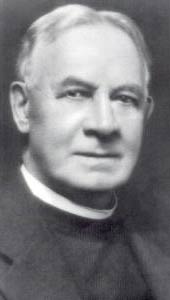 Born in Meadowville, Ontario, Canada, Nov. 20, 1856, son of Peter Rowe and Mary Elizabeth (Trimble). B.A., Trinity College, Toronto, 1878; M.A., 1880; D.D. 1895. Ordained to the diaconate, 1878, and to the priesthood, 1880, by Bishop Fauquier. Missionary, Garden River, Algoma, Canada, 1878-82. Married Dora H. Carry, June 1, 1882; she and Bishop had two sons. Missionary, Sault Ste. Marie Michigan, 1882-95. Consecrated Bishop, Nov. 30, 1895, by Bhiops Doane, Whitaker, Starkey, H.C. Potter, Talbot, A. Leonard, Davies, and Brooke. Appointed Missionary Bishop of Alaska, 1895. Dora Rowe died May 22, 1914. He married Rose H. Fullerton, Oct. 21, 1915; they had three sons. Bishop Rowe died June 1, 1942 in Victoria, British Columbia. His ashes were interred in the churchyard of St. Peter’s by-the-Sea, in Sitka Alaska.
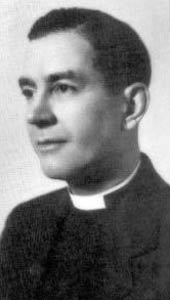 Born in Hampton, Virginia, Feb. 9, 1896, son of Charles Headley Bentley and Susan Elizabath (Cake). Graduated from College of William and Mary, 1919; Doctor of Divinity, Virginia Theological Seminary, 1932; Doctor of Sacred Theology, General Theological Seminary, 1948; Doctor of Humane Letters, St. Paul University, Japan; Doctor of Divinity, College of William and Mary, 1895. Ordained to the diaconate in Anvik, July 1922, by Bishop Rowe; to the priesthood, June 1929, by Bishop Tucker. Married May 29, 1921 to Elvira Wenworth Carr. Assistant, Christ Church, Anvik, 1921-25. Master, Charlotte Hall School, Maryland, 1925-26. Assistant, Bruton Parish, Williamsburg, Virginia, 1926-30. Archdeacon of the Yukon, 1930-31. Consecrated Suffragan Bishop of Alaska, Sept. 29, 1931; served as Suffragan, 1931-42; Bishop-in-Charge, 1942-43; Bishop of Alaska, 1943-47. Director, Overseas Dept; Vice President, Episcopal Church Executive Council, 1948-64. Phi Beta Kappa. Died in Hampton Virginia, June 12, 1989.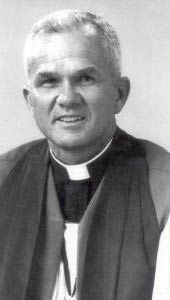
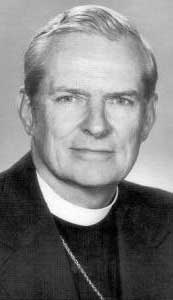 Born in Buffalo, NY, April 9, 1915, son of Clement Cochran and Agnes (Haynes). B.A., 1936; D.D., 1975, Hamilton College; B.D., 1939, Episcopal Theological School; S.T.D., 1982, Church Divinity School of the Pacific. Ordained to the diaconate, 1940; to the preisthood, Sept. 1940. Married Mary Elizabeth Zabrinskie, Feb. 7, 1942; they had three children. Curate, St. Mark’s, Grand Rapids, MI, 1940-42. Rector, St. Pauls, Dowagiac, MI 1942-44. Chaplain (Captain), US Army, 1944-46. Chaplain, Univ. of Washington, 1946-52. Rector, St. John’s, Northampton, MA, 1952-56. National Commission on College Work, 1956-58. Board of Windham House, 1957-59. Visiting Lecturer, Smith College, 1961. Vicar Standing Rock Mission, Ft. Yates, ND, 1966-69. Consultant, Board for Clergy Deployment, 1970. Director, Dakota Leadership Program, 1970-74. Board of Theological Education, 1971-76. Bishop of Alaska, 1974-81. Vicar, Holy Family of Jesus Cambodian Church, 1984-88; Dir., Cambodian Ord. Program. Died Oct. 30, 2001.
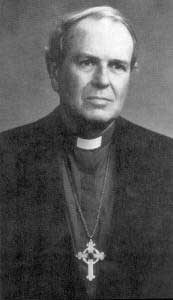 George Clinton Harris was born Dec. 19, 1925 to Clinton George and Meta Grace (Warner) Harris. B.S., Chemical Engineering, Rutgers University, 1950. S.T.B., 1953; S.T.M., 1953; D.D., 1983, General Theological Seminary. Ordained to the diaconate, May 1953; to the priesthood, Dec. 1953. Married Mary Shotwell, June 27, 1953; they had six children. Curate, Church of the Heavenly Rest, NYC, 1953-55; Chaplain, Easter School; Assist., Epiphany Church, Phillippines, 1956-62. Hartford Seminary Foundation, 1962-63. Principal, St. Francis H.S., Philippines, 1963-69. Rector, Lower Luzerne Parish, Hazelton, PA, 1970-74. Director, Dakota Leadership Program, 1974-81. Deputy, General Convention, 1979. Consecrated Bishop of Alaska, June 7, 1981. Harris retired as Bishop of Alaska in March of 1991. Died on May 7, 2000.
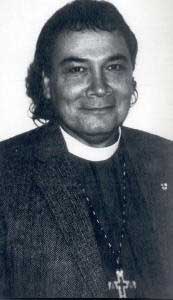 Born: Duncan, OK, Feb. 15, 1949, son of Gilbert Charleston and Billie Louise (Burns). Enrolled member, Choctaw Nation of Oklahoma. B.A., Trinity College, 1971; M. of Div., Episcopal Divinity School, 1976; D.D., Trinity College, 1992, and AK Pacific University, 1994. Native American Theological Association. Married Susan Flora Shettles, July 28, 1978; one son, Nicholas Tecumseh. Ordained to the diaconate, 1982; to the priesthood, Mar. 1983. Exec. Director, National Commission on Indian Work, NYC, 1980-82. Director, Dakota Leadership Program, 1982-84. Director, Cross-Cultural Studies; Assoc. Professor, Systematic Theology, Luther NW Theological Seminary, St. Paul, MN, 1984-90. Vicar, Holy Trinity/St. Anskar, St. Paul, late 80’s. Consecrated Bishop of Alaska, Mar. 23, 1991. Author: Reflections on a Revival: The Native American Alternative; Respecting the Circle: Sharing in Worship with Native Americans: Good News from Native America.
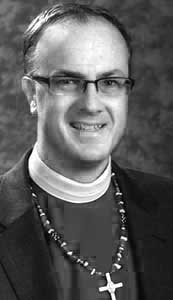
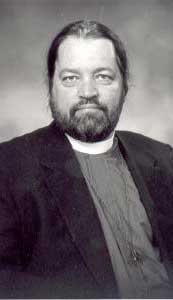 The Rt. Rev. Mark MacDonald, VII bishop of Alaska, was born on Jan. 15, 1954 the son of Blake and Sue Nell MacDonald. His formal education includes a B.A. degree in Religious Studies and Psychology from the College of St. Scholastics, Duluth, MN, a M.A. of Divinity Degree from Wycliffe College, Toronto, Ontario, Canada; and post graduate work at Luther-Northwestern Theological Seminary in Minneapolis, MN.